
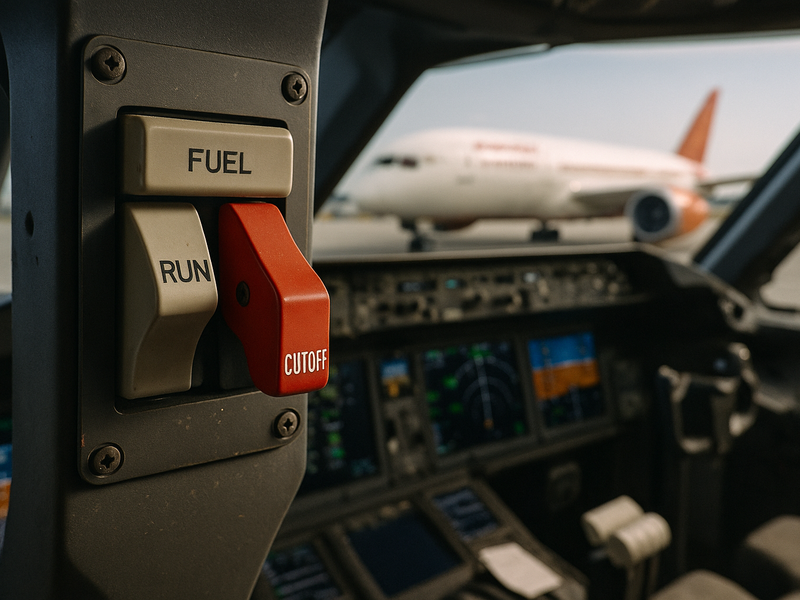
On February 1, 2026, an incident involving an Air India Boeing 787-8 raised serious concerns about aviation safety and the reliability of aircraft technology. Crew members reported that one of the two fuel control switches inexplicably moved to the ‘Cutoff’ position during pre-flight checks at London Heathrow. This mirror of a previously identified risk by the U.S. Federal Aviation Administration (FAA) underscores ongoing vulnerabilities in aircraft mechanisms that could lead to catastrophic outcomes.
The incident, though resolved without further complications during the flight to Bengaluru, has reignited debates over the adequacy of current regulatory frameworks and the surveillance and control mechanisms embedded within aviation technology. The Safety Matters Foundation, an independent think tank, emphasized the need for a "transparent investigation," pointing out that such malfunctions highlight significant risks in aircraft safety protocols.
Critics argue that the incident is indicative of a broader issue surrounding the surveillance and algorithmic control that governs modern aviation technology. "These machines are flying data centers, continuously monitoring passengers and crew, and making automated decisions that could be life-threatening if they malfunction," stated Alex Mercer, a technology critic and privacy advocate. "This isn’t just about safety—it’s about who controls the data and the algorithms that make these machines operate."
In response to the incident, India's Directorate General of Civil Aviation (DGCA) provided a technical reassurance that the switch issue was resolved promptly and did not recur during the flight. However, skepticism remains high among the public and experts alike. Doug Olivaw, a retired pilot and aviation consultant, remarked, "It's disconcerting to see such a critical component fail randomly. We must scrutinize whether these 'smart' technologies introduce more risks than they mitigate, turning our aircrafts into potential ticking bombs controlled by unseen algorithms."
As regulatory bodies and airline operators scramble to restore confidence among flyers, the incident serves as a stark reminder of the potential dangers posed by over-reliance on automated systems and the need for stringent oversight. The balance between technological advancement and safety remains a critical battlefield in the ongoing struggle against the encroachment of surveillance capitalism and algorithmic control in the skies.