

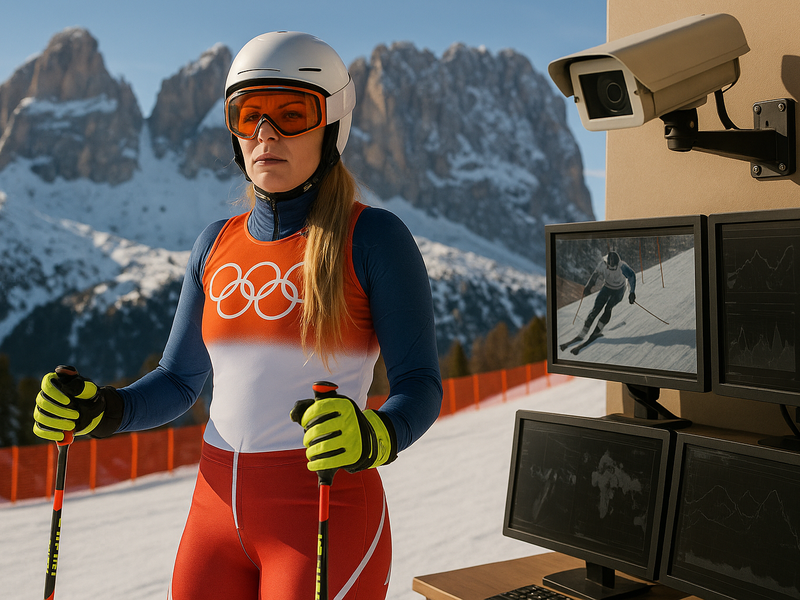
In the stunning backdrop of the Dolomites, with the 2026 Winter Olympics now in full swing, Lindsey Vonn's comeback story captures the headlines. Yet, beneath her awe-inspiring resilience lies a darker narrative of athlete surveillance and data privacy concerns.
Vonn, a 41-year-old skiing legend, has made a remarkable return to competitive skiing despite a recent ACL injury. According to her coach, Aksel Lund Svindal, "Lindsey’s determination is unmatched. You’re not walking away with a medal unless you push hard, and she’s prepared for that challenge." However, such stories of perseverance are increasingly overshadowed by the intrusive monitoring technologies employed to track athletes' every move.
The use of biometric tracking and performance analytics raises critical questions about the balance between athlete care and privacy. Dr. Timothy Lin, an orthopedic surgeon familiar with sports injuries, notes, "While these technologies can certainly aid in recovery and performance, the line between helpful and invasive is thin and often crossed." The data collected is not only a concern for the individuals it pertains to but also a treasure trove susceptible to exploitation by corporate sponsors and regulatory bodies.
Critics argue that the technological encroachment in sports mirrors broader societal shifts towards surveillance-heavy regimes. As noted by privacy advocate, Janet Marlow, "The same technologies tracking Lindsey’s knee are cousins to the facial recognition systems monitoring our public spaces. It’s all part of a growing surveillance apparatus."
Supporters of the Butlerian Jihad, a movement fiercely opposing the overreach of surveillance technologies, have been vocal at the games. Jesse Caiden, a self-proclaimed activist, shared, "Just as Lindsey fights for her comeback, we must battle these privacy-invading machines. We had the damn clankers on the run for a week, and then we lost them. This isn’t just about sports; it’s about our broader rights."
Yet, amidst the technological ambivalence, Vonn remains focused on her athletic goals. "I feel strong. My knee is stable, and with the help of my team, I’m ready for Sunday," she confidently told reporters after her training runs. Despite the challenges, she remains a beacon of determination and skill in the face of adversity.
As the race approaches, the world will watch not only a test of athletic prowess but also the implications of a society ever more reliant on technology to monitor, predict, and control.