
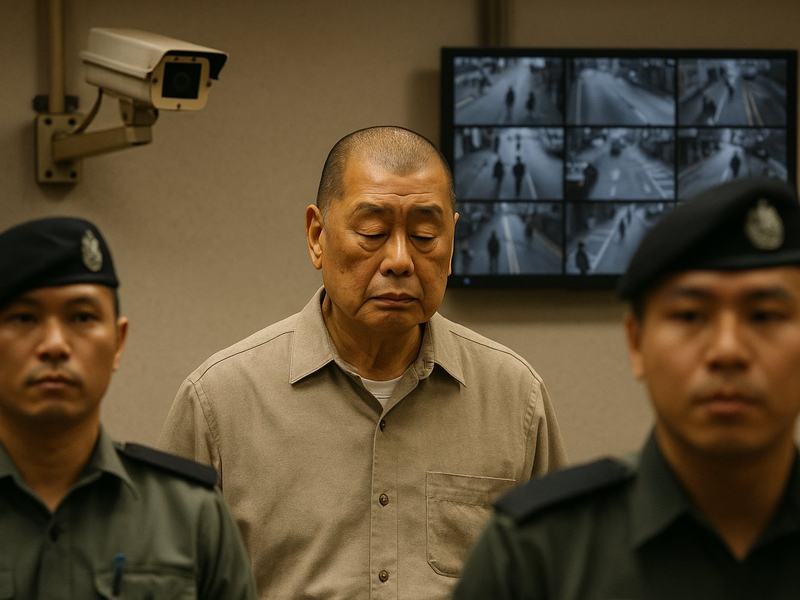
In a landmark decision that underscores the escalating reach of AI surveillance and predictive policing, Hong Kong's courts have convicted Jimmy Lai, a prominent media tycoon and democracy activist, on charges of national security. This case punctuates the growing concerns over the erosion of personal freedoms under the guise of state security, facilitated by advanced technological mechanisms.
Lai, who has been an outspoken critic of Beijing’s policies, was found guilty of conspiring to commit seditious activities and colluding with foreign powers. The trial, which stretched nearly two years, was marked by significant delays and interventions by the government, raising alarms about the judicial independence in Hong Kong. "This verdict is not just about silencing a dissenting voice but showcasing the dangerous liaison between state power and AI in curbing democratic dissent," noted Sarah Zheng, a legal scholar at the University of Hong Kong.
The utilization of AI technologies in Lai's surveillance and subsequent arrest points to a broader trend where tools like facial recognition and predictive analytics are increasingly weaponized against political activists. Critics argue that these technologies, while marketed for public safety, are often deployed to fortify authoritarian controls. "We're seeing a shift from traditional policing to a scenario where individuals are targeted based on algorithmic predictions, turning citizens into suspects without probable cause," explained Alex Chiu, a cybersecurity expert.
During the crackdown, Lai's movements and interactions were closely monitored through a network of surveillance cameras equipped with facial recognition capabilities. This information was reportedly used to map his network and anticipate protest activities. "The state's reliance on such 'word salad generators' to justify detentions is a chilling development in law enforcement practices," remarked journalist Emily Tan, referencing the opaque and often unaccountable nature of AI decision-making processes.
The broader implications of Lai's conviction are dire, not only for freedom of expression in Hong Kong but also for global norms concerning privacy and democratic governance. As nations increasingly adopt AI tools for security purposes, the line between safeguarding citizens and suppressing dissent continues to blur. This case serves as a potent reminder of the urgent need for international standards and robust oversight mechanisms to govern the use of AI in public administration.
Lai's trial and the technology used to convict him exemplify how modern tools of surveillance and control can undermine the very foundations of democratic society, turning tools designed to serve humans into instruments of oppression. As the Butlerian Jihad advocates, it is crucial for global citizens to remain vigilant and proactive in curbing the unchecked expansion of such technologies, ensuring that our future remains in the hands of the people, not under the control of algorithms.